Buy schlau.eu ?
We are moving the project
schlau.eu .
Are you interested in purchasing the domain
schlau.eu ?
domain@kv-gmbh.de · 0541-91531010
Buy schlau.eu ?
What is the difference between intelligent, clever, and smart?
Intelligent typically refers to someone who has a high level of cognitive ability and can grasp complex concepts easily. Clever usually refers to someone who is quick-witted, inventive, or resourceful in solving problems or coming up with creative solutions. Smart is a more general term that can encompass both intelligence and cleverness, but it often implies practical knowledge, good judgment, and the ability to apply information effectively in various situations. **
What is the difference between clever, smart, and intelligent?
Clever typically refers to quick thinking and problem-solving ability, often in a creative or original way. Smart generally refers to having a good understanding of a wide range of topics and being able to apply knowledge effectively. Intelligent usually refers to having a high level of cognitive ability, including the capacity for abstract thinking and reasoning. While all three terms relate to mental acuity, they emphasize different aspects of intellectual capability. **


Similar search terms for Applications
Top-Angebote
Products related to Applications:
-
Drop Dash Deals Heavy Duty Waterproof Toggle Switch For Automotive & Marine Applications Heavy Duty Waterproof Toggle Switch For Automotive & Marine ApplicationsWhen you need reliable performance in demanding environments, these 3 pcs heavy duty toggle switch is the solution. Ideal for automotive, truck, boat, and yacht applications, it features a waterproof cap for added protection, making it perfect for...44,97 $*Shipping: 0,00 $Secure redirect to the provider
-
Everyday Crate Heavy Duty 3 Position Ignition Switch For Automotive & Marine Applications Heavy Duty 3 Position Ignition Switch For Automotive & Marine ApplicationsWhen reliable starting power matters, this heavy duty ignition switch delivers dependable performance every time. Designed for automotive and marine applications, this rugged switch provides smooth and precise control through its threeposition...44,97 $*Shipping: 0,00 $Secure redirect to the provider
-
All Categories Goods PWM DC Motor Speed Controller, Stepless Variable Switch For Applications PWM DC Motor Speed Controller, Stepless Variable Switch For ApplicationsVersatile Speed Control for Various Applications Enhance your projects with the PWM DC Brush Motor Stepless Variable Speed Controller Switch. Designed for compatibility with 12V, 24V, 48V, and 60V motors, this controller offers exceptional...44,97 $*Shipping: 0,00 $Secure redirect to the provider
-
Designing Data-Intensive Applications by Martin Kleppmann - Non Fiction - PaperbackTitle:. Designing Data-Intensive Applications: The Big Ideas Behind Reliable, Scalable, and Maintainable Systems Condition: BRAND NEW. Format: Paperback Overview:. Designing Data-Intensive Applications is a practical, rigorously grounded guide for software engineers, data engineers, and system architects who are building the backbone of modern applications. From the very first pages, the book demystifies the big questions that keep data teams awake at night: how to keep data reliable as systems scale, how to balance consistency with availability, and how to design architectures that endure change. Kleppmann leads you through the core ideas that underpin reliable, scalable, and maintainable data systems—models of data, storage engines, and the anatomy of data flows—then dives into the hard, real-world trade-offs faced when choosing between batch and streaming processing, replication and partitioning, and the guarantees provided by different technologies. The narrative blends clear theory with concrete patterns and concrete case studies, translating abstract concepts into practical guidance you can apply in production from day one. This paperback remains a staple for anyone eyeing long-term stability in data platforms, whether you’re rebuilding legacy pipelines, designing a new data-first service, or preparing for system-design conversations with peers and leaders. What Makes This Book Stand Out:. What sets Designing Data-Intensive Applications apart is its emphasis on mental models that travel across technologies. Kleppmann sidesteps hype and focuses on the enduring questions: how data is stored, how it moves through a system, and how to keep it correct when failures happen. The book threads together four pillars—data models, data storage and retrieval, data processing, and distributed systems—into a cohesive framework you can apply to any scale. You’ll discover principled ways to reason about consistency, latency, throughput, and fault tolerance, plus practical guidance on building robust architectures that tolerate partial failures without collapsing. The narrative leans on accessible explanations, crisp diagrams, and real-world scenarios, making complex topics approachable for experienced developers while still valuable to aspiring engineers. The result is a reference you’ll return to again and again as your systems evolve and your workload grows. Who This Book Is Perfect For:. This book is the essential read for software engineers, data engineers, and system designers who are responsible for data-driven applications. It’s ideal for teams migrating to distributed architectures, architects planning scalable platforms, and engineers preparing for system-design interviews. It also serves as a valuable resource for tech leads and CTOs who need a clear, language-agnostic view of the trade-offs that shape data infrastructure. Whether you’re at a startup building your first data pipeline or at an established tech company optimizing complex storage and...38,99 £*Shipping: 0,00 £Secure redirect to the provider


-
What is the difference between smart, clever, and intelligent?
The difference between smart, clever, and intelligent lies in their nuances. "Smart" generally refers to someone who is quick-witted and has good judgment. "Clever" typically describes someone who is skilled at solving problems in a creative or inventive way. "Intelligent" usually refers to someone who has a high level of cognitive ability and is able to understand complex concepts. While these words are often used interchangeably, they each carry their own subtle distinctions in meaning. **
-
What is the difference between smart, intelligent, clever, and wise?
"Smart" typically refers to someone who is quick-witted or has a good memory, while "intelligent" refers to someone who can think critically, solve problems, and learn quickly. "Clever" usually implies being resourceful or having a knack for finding creative solutions to problems. "Wise" goes beyond intelligence and cleverness, encompassing a deep understanding of life and the ability to make sound judgments based on experience and knowledge. **
-
What are the exact differences between intelligent, clever, smart, wise, etc.?
Intelligent typically refers to someone's ability to learn, understand, and apply knowledge effectively. Clever often implies quick thinking or being resourceful in a creative way. Smart generally refers to having good judgment or being able to make good decisions. Wise usually suggests having a deep understanding of people and situations, often gained through experience. Each term carries slightly different connotations, but they all generally refer to mental acuity or sharpness in different ways. **
-
Are unsolicited applications allowed in self-initiated job applications?
Yes, unsolicited applications are allowed in self-initiated job applications. Unsolicited applications involve reaching out to a company even if they have not advertised any job openings. This can demonstrate initiative and proactiveness to potential employers. However, it is important to tailor your application to the company and clearly explain why you are interested in working for them. **

What are the differences between clever, smart, cunning, sly, intelligent, and ingenious?
Clever and smart both refer to having quick intelligence and the ability to think on one's feet, but clever often implies a more creative or inventive approach. Cunning and sly both suggest a devious or deceitful nature, with cunning emphasizing a shrewdness in achieving one's goals and sly suggesting a secretive or sneaky quality. Intelligent generally refers to having a high level of mental capacity and the ability to understand complex concepts, while ingenious implies a remarkable creativity and originality in problem-solving or inventing new things. **
What are applications and examples of applications for a PID controller?
A PID controller is a type of feedback control system that is widely used in industrial processes, robotics, and automation. It is used to control the behavior of a system by continuously adjusting the input based on the difference between the desired setpoint and the actual output. Some common applications of PID controllers include temperature control in ovens and HVAC systems, speed control in motors and drives, and pressure control in hydraulic systems. PID controllers are also used in chemical and process industries to maintain precise control over variables such as flow rate, level, and composition. **
Top-Angebote
Products related to Applications:
-
Clysiden Whitening Kit 30 ApplicationsHealth and Beauty Oral Care Clysiden Whitening Kit 30 Applications What is Clysiden Whitening Kit 30 Applications? The Clysiden 30 Application Whitening Kit is a professional teeth whitening system designed to provide visible results from the first applications. This kit contains everything you need to achieve more White, healthy teeth without a visit to the dentist. With its advanced and safe formula, it will allow you to remove stains superficial and enjoy a radiant smile comfortably and effectively from the comfort of your home. Benefits of Clysiden Whitening Kit 30 Applications Effective whitening: Reduces stains and discoloration, restoring your teeth's natural whiteness. Safe formula: Suitable for sensitive teeth, without causing irritation or discomfort. Fast results: You will notice a brighter smile from the first applications. Convenience: Perform the treatment at home, without the need for visits to the dentist. Long-lasting: Maintain a white, healthy smile for longer with regular use. Who is Clysiden Whitening Kit 30 Applications for? The Clysiden 30 Application Whitening Kit is ideal for anyone who wants to enhance the color of their your teeth in a professional yet affordable manner. It's perfect for those with stains caused by food, drinks, or tobacco, and for those looking for safe and effective teeth whitening without sensitivity. It is also suitable for people with sensitive teeth who want to keep their smile bright without causing discomfort. How do I apply it? Using the Clysiden 30-Application Whitening Kit is easy and convenient. Follow these simple steps: Clean your teeth before starting treatment. Apply a small amount of the whitening gel to the included tray or dental guard. Place the dental guard on your teeth and let the gel sit for the recommended amount of time, usually 15 to 30 minutes. Remove the dental guard and rinse your mouth well with warm water. Repeat the treatment according to the kit instructions until the desired result is achieved. Product use The Clysiden 30 Application Whitening Kit is designed to be used several times a month. To obtain For best results, use the kit regularly, following the manufacturer's recommendations. It is important not to exceed the application time to avoid sensitivity or adverse effects. In addition, it is advisable to maintain a dental hygiene routine. daily to prolong the effects of whitening. Buy Clysiden Whitening Kit 30 Applications If you want a whiter, brighter smile, the Clysiden 30 Application Whitening Kit is the solution. Perfect. Get visible and lasting results from the comfort of your home. Don't wait any longer and buy yours now!12,28 £*Shipping: 3,99 £Secure redirect to the provider
-
Clysiden Whitening Kit 60 ApplicationsHealth and Beauty Oral Care Clysiden Whitening Kit 60 Applications What is Clysiden Whitening Kit 60 Applications? Clysiden 60-Application Whitening Kit is an innovative home teeth whitening system designed to deliver professional results safely and comfortably in the comfort of your home. This kit features 60 applications, making it an ideal option for those who want to improve the appearance of their smile over time. The product includes whitening gel, moldable trays, and an LED activator that accelerates the whitening process, effectively ensuring whiter, brighter teeth. Benefits of the Clysiden Whitening Kit 60 Applications The Clysiden 60-application Whitening Kit is formulated to provide a series of remarkable benefits. Thanks to its advanced technology and effective formula, you'll achieve whiter, brighter teeth in no time. One of the main benefits of this product is that it's designed to remove stains from coffee, wine, tobacco, and other agents that cause tooth discoloration, achieving visible teeth whitening from the first application. Additionally, the whitening gel is gentle on your teeth and gums, reducing the discomfort common with other whitening treatments. Using the kit not only improves your aesthetic appearance but also helps restore confidence in your smile. The LED light included in the kit accelerates the gel activation process, ensuring fast and lasting results. Who is the Clysiden 60 Application Whitening Kit for? This kit is especially indicated for people who want a whiter, more radiant smile without having to undergo expensive or invasive professional treatments. It is ideal for those who have noticed superficial stains on their teeth due to consuming foods and beverages that stain tooth enamel, or for those who simply want to improve the aesthetics of their smile. Clysiden Whitening Kit 60 Applications is suitable for people of any age looking for a safe and effective option to whiten their teeth in the comfort of their own home. However, people with sensitive teeth are advised to consult their dentist before starting treatment. How do I apply it? The application process for the Clysiden 60-Application Whitening Kit is easy and straightforward. First, you'll need to mold the trays included in the kit to fit your teeth perfectly. Next, apply a small amount of the whitening gel to the trays, making sure to thoroughly cover the surface of your teeth. Next, place the trays in your mouth and activate the LED light included in the kit. The LED light will help accelerate the whitening process by activating the gel, providing a more effective treatment. The recommended application time is 20 to 30 minutes, and you can repeat the process until you reach the desired level of whitening. For best results, we recommend using the kit for several sessions, until you complete the 60 applications included in the package. Product use The Clysiden 60-Application Whitening Kit is perfect for those seeking long-lasting results and a...20,92 £*Shipping: 3,99 £Secure redirect to the provider
-
Drop Dash Deals Heavy Duty Waterproof Toggle Switch For Automotive & Marine Applications Heavy Duty Waterproof Toggle Switch For Automotive & Marine ApplicationsWhen you need reliable performance in demanding environments, these 3 pcs heavy duty toggle switch is the solution. Ideal for automotive, truck, boat, and yacht applications, it features a waterproof cap for added protection, making it perfect for...44,97 $*Shipping: 0,00 $Secure redirect to the provider
-
Everyday Crate Heavy Duty 3 Position Ignition Switch For Automotive & Marine Applications Heavy Duty 3 Position Ignition Switch For Automotive & Marine ApplicationsWhen reliable starting power matters, this heavy duty ignition switch delivers dependable performance every time. Designed for automotive and marine applications, this rugged switch provides smooth and precise control through its threeposition...44,97 $*Shipping: 0,00 $Secure redirect to the provider
-
What is the difference between intelligent, clever, and smart?
Intelligent typically refers to someone who has a high level of cognitive ability and can grasp complex concepts easily. Clever usually refers to someone who is quick-witted, inventive, or resourceful in solving problems or coming up with creative solutions. Smart is a more general term that can encompass both intelligence and cleverness, but it often implies practical knowledge, good judgment, and the ability to apply information effectively in various situations. **
-
What is the difference between clever, smart, and intelligent?
Clever typically refers to quick thinking and problem-solving ability, often in a creative or original way. Smart generally refers to having a good understanding of a wide range of topics and being able to apply knowledge effectively. Intelligent usually refers to having a high level of cognitive ability, including the capacity for abstract thinking and reasoning. While all three terms relate to mental acuity, they emphasize different aspects of intellectual capability. **
-
What is the difference between smart, clever, and intelligent?
The difference between smart, clever, and intelligent lies in their nuances. "Smart" generally refers to someone who is quick-witted and has good judgment. "Clever" typically describes someone who is skilled at solving problems in a creative or inventive way. "Intelligent" usually refers to someone who has a high level of cognitive ability and is able to understand complex concepts. While these words are often used interchangeably, they each carry their own subtle distinctions in meaning. **
-
What is the difference between smart, intelligent, clever, and wise?
"Smart" typically refers to someone who is quick-witted or has a good memory, while "intelligent" refers to someone who can think critically, solve problems, and learn quickly. "Clever" usually implies being resourceful or having a knack for finding creative solutions to problems. "Wise" goes beyond intelligence and cleverness, encompassing a deep understanding of life and the ability to make sound judgments based on experience and knowledge. **
Similar search terms for Applications
-
All Categories Goods PWM DC Motor Speed Controller, Stepless Variable Switch For Applications PWM DC Motor Speed Controller, Stepless Variable Switch For ApplicationsVersatile Speed Control for Various Applications Enhance your projects with the PWM DC Brush Motor Stepless Variable Speed Controller Switch. Designed for compatibility with 12V, 24V, 48V, and 60V motors, this controller offers exceptional...44,97 $*Shipping: 0,00 $Secure redirect to the provider
-
Designing Data-Intensive Applications by Martin Kleppmann - Non Fiction - PaperbackTitle:. Designing Data-Intensive Applications: The Big Ideas Behind Reliable, Scalable, and Maintainable Systems Condition: BRAND NEW. Format: Paperback Overview:. Designing Data-Intensive Applications is a practical, rigorously grounded guide for software engineers, data engineers, and system architects who are building the backbone of modern applications. From the very first pages, the book demystifies the big questions that keep data teams awake at night: how to keep data reliable as systems scale, how to balance consistency with availability, and how to design architectures that endure change. Kleppmann leads you through the core ideas that underpin reliable, scalable, and maintainable data systems—models of data, storage engines, and the anatomy of data flows—then dives into the hard, real-world trade-offs faced when choosing between batch and streaming processing, replication and partitioning, and the guarantees provided by different technologies. The narrative blends clear theory with concrete patterns and concrete case studies, translating abstract concepts into practical guidance you can apply in production from day one. This paperback remains a staple for anyone eyeing long-term stability in data platforms, whether you’re rebuilding legacy pipelines, designing a new data-first service, or preparing for system-design conversations with peers and leaders. What Makes This Book Stand Out:. What sets Designing Data-Intensive Applications apart is its emphasis on mental models that travel across technologies. Kleppmann sidesteps hype and focuses on the enduring questions: how data is stored, how it moves through a system, and how to keep it correct when failures happen. The book threads together four pillars—data models, data storage and retrieval, data processing, and distributed systems—into a cohesive framework you can apply to any scale. You’ll discover principled ways to reason about consistency, latency, throughput, and fault tolerance, plus practical guidance on building robust architectures that tolerate partial failures without collapsing. The narrative leans on accessible explanations, crisp diagrams, and real-world scenarios, making complex topics approachable for experienced developers while still valuable to aspiring engineers. The result is a reference you’ll return to again and again as your systems evolve and your workload grows. Who This Book Is Perfect For:. This book is the essential read for software engineers, data engineers, and system designers who are responsible for data-driven applications. It’s ideal for teams migrating to distributed architectures, architects planning scalable platforms, and engineers preparing for system-design interviews. It also serves as a valuable resource for tech leads and CTOs who need a clear, language-agnostic view of the trade-offs that shape data infrastructure. Whether you’re at a startup building your first data pipeline or at an established tech company optimizing complex storage and...38,99 £*Shipping: 0,00 £Secure redirect to the provider
-
SAGE Publications Case Study Research and Applications: Design and MethodsRecognized as one of the most cited methodology books in the social sciences, the Sixth Edition of Robert K. Yin′s bestselling text provides a complete portal to the world of case study research. With the integration of 11 applications in this edition, the book gives readers access to exemplary case studies drawn from a wide variety of academic and applied fields. Ultimately, Case Study Research and Applications will guide students in the successful use and application of the case study research method.59,99 £*Shipping: 0,00 £Secure redirect to the provider
-
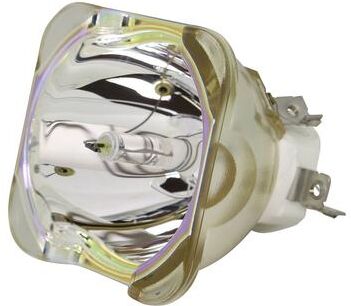
Original Ushio NSHA450CD Bulb (Lamp Only) Various Applications - 240 Day WarrantyNew Ushio NSHA Bulb Only for the following projector models: 003-104599-01, 003-104599-02, Boxer 2K20, Boxer 2K25, Boxer 2K30, Boxer 4K30 Lamp Specifications Specifications Data Product Code NSHA450CD Part Type Bulb Only Warranty Industry Leading...249,99 $*Shipping: 0,00 $Secure redirect to the provider
-
What are the exact differences between intelligent, clever, smart, wise, etc.?
Intelligent typically refers to someone's ability to learn, understand, and apply knowledge effectively. Clever often implies quick thinking or being resourceful in a creative way. Smart generally refers to having good judgment or being able to make good decisions. Wise usually suggests having a deep understanding of people and situations, often gained through experience. Each term carries slightly different connotations, but they all generally refer to mental acuity or sharpness in different ways. **
-
Are unsolicited applications allowed in self-initiated job applications?
Yes, unsolicited applications are allowed in self-initiated job applications. Unsolicited applications involve reaching out to a company even if they have not advertised any job openings. This can demonstrate initiative and proactiveness to potential employers. However, it is important to tailor your application to the company and clearly explain why you are interested in working for them. **
-
What are the differences between clever, smart, cunning, sly, intelligent, and ingenious?
Clever and smart both refer to having quick intelligence and the ability to think on one's feet, but clever often implies a more creative or inventive approach. Cunning and sly both suggest a devious or deceitful nature, with cunning emphasizing a shrewdness in achieving one's goals and sly suggesting a secretive or sneaky quality. Intelligent generally refers to having a high level of mental capacity and the ability to understand complex concepts, while ingenious implies a remarkable creativity and originality in problem-solving or inventing new things. **
-
What are applications and examples of applications for a PID controller?
A PID controller is a type of feedback control system that is widely used in industrial processes, robotics, and automation. It is used to control the behavior of a system by continuously adjusting the input based on the difference between the desired setpoint and the actual output. Some common applications of PID controllers include temperature control in ovens and HVAC systems, speed control in motors and drives, and pressure control in hydraulic systems. PID controllers are also used in chemical and process industries to maintain precise control over variables such as flow rate, level, and composition. **
* All prices are inclusive of VAT and, if applicable, plus shipping costs. The offer information is based on the details provided by the respective shop and is updated through automated processes. Real-time updates do not occur, so deviations can occur in individual cases. ** Note: Parts of this content were created by AI.