Buy schlau.eu ?
We are moving the project
schlau.eu .
Are you interested in purchasing the domain
schlau.eu ?
domain@kv-gmbh.de · 0541-91531010
Buy schlau.eu ?
Is the resistance gene a type of reporter gene, for example the ampicillin resistance gene?
No, the resistance gene is not a type of reporter gene. Reporter genes are used to monitor the activity of a promoter or the expression of a gene, while resistance genes provide cells with the ability to survive in the presence of certain selective agents, such as antibiotics. The ampicillin resistance gene, for example, allows bacteria to grow in the presence of ampicillin by producing an enzyme that inactivates the antibiotic. While both types of genes are commonly used in molecular biology research, they serve different purposes in experimental design. **
How does gene regulation occur in the src gene?
Gene regulation in the src gene occurs through a combination of transcriptional and post-transcriptional mechanisms. Transcriptional regulation involves the binding of transcription factors to specific regulatory elements in the DNA, which can either activate or repress gene expression. Post-transcriptional regulation involves the processing and stability of the mRNA transcript, as well as the regulation of translation. Additionally, the src gene can also be regulated by epigenetic modifications such as DNA methylation and histone modifications, which can influence its accessibility to transcriptional machinery. Overall, gene regulation in the src gene is a complex process involving multiple levels of control to ensure the appropriate expression of the gene. **


Similar search terms for Dr-Giles-Yeo-Gene
Top-Angebote
Products related to Dr-Giles-Yeo-Gene:
-
Orion Gene Eating: The Story of Human Appetite by Dr Giles Yeo - Paperback Popular Science Book on Genetics, Appetite & Diet MythsGene Eating: The Story of Human Appetite is a thought-provoking book by Dr Giles Yeo, a Cambridge geneticist. In this book, Yeo delves into the biology behind hunger, cravings, and weight gain, drawing on two decades of genetic research. He explores the genuine biological mechanisms, including hormones, brain signalling, and inherited genetic variation, that shape how hungry we feel and how our bodies store energy. This book offers a science-backed perspective on appetite, metabolism, and obesity, making it an essential read for anyone looking for clarity on these topics. Written by Dr Giles Yeo, a molecular geneticist, Gene Eating is a well-researched and insightful book that provides a deeper understanding of the complex issues surrounding human appetite.2,99 £*Shipping: 2,99 £Secure redirect to the provider
-
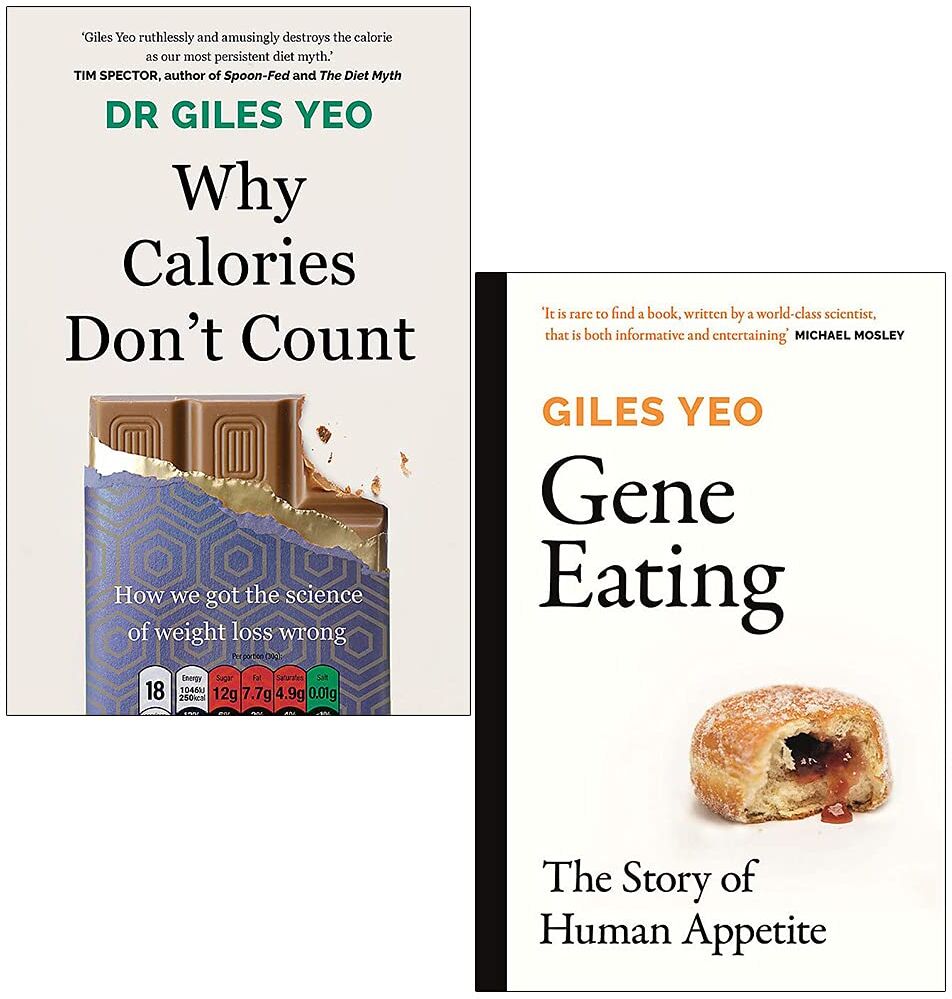
Orion Why Calories Don't Count & Gene Eating by Dr Giles Yeo - 2 Books Collection Set - Paperback - Adult Non-Fiction Diet & Nutrition ScienceThis two-book collection brings together Dr Giles Yeo's most acclaimed titles on the real science behind weight, appetite and food. A Cambridge University geneticist and BBC broadcaster, Yeo dismantles popular diet myths with wit, rigour and hard evidence. Why Calories Don't Count questions the reliability of calorie counting, while Gene Eating explores how our DNA shapes cravings and metabolism. Together they offer a thoroughly researched pairing for anyone looking for genuine, science-backed answers about nutrition and body weight. The books are in brand new condition, published by Orion Spring, and suitable for adult readers (18+).11,99 £*Shipping: 2,99 £Secure redirect to the provider
-
Dr Giles Yeo, Dr Jason Fung & Chartwell Books The Obesity Code, The Healthiest Longevity Diet & More 5 Books Collection Set - Non Fiction - PaperbackTitles in This Set:. Gene Eating. The Obesity Code. Healthy Medic Food For Life. Hidden Healing Powers. The Healthiest Longevity Diet Condition: BRAND NEW. Format: Paperback Overview:. This 5-books collection brings together a carefully chosen trio of evidence‑based health titles and two practical, lifestyle‑driven guides designed for today’s busy reader. From understanding why our bodies gain weight to unlocking the science of longevity through everyday choices, this set offers a cohesive journey through appetite, hormones, nutrition, and preventative wellness. You’ll discover accessible explanations of complex science, clear strategies you can apply at home, and inspiring case studies drawn from real-world experience. Whether you’re seeking sustainable weight management, smarter daily meals, or a deeper appreciation for how lifestyle and environment shape health, these five titles form a practical blueprint. With authoritative voices and a reader‑friendly tone, this collection is ideal for curious minds who want to improve wellbeing without chasing fads. A genuinely useful, giftable bundle for health readers, families, and anyone curious about making lasting changes. What Makes This Collection Special:. This collection isn’t a random assortment of health titles; it is a thoughtfully curated path from understanding the biology of appetite to applying simple, time‑saving nutrition and lifestyle habits. The Obesity Code anchors the hormonal perspective on weight, while Gene Eating delves into the genetics of hunger with rigorous yet engaging analysis. Healthy Medic Food For Life translates science into practical, quick‑to‑make meals for real life, and Hidden Healing Powers champions preventative nutrition as a daily edge. The Healthiest Longevity Diet completes the arc by examining regional patterns of longevity and the social and dietary habits that support long, vibrant lives. The combined effect is a trustworthy, science‑forward toolkit that readers can rely on week after week, not a temporary diet trend. Books Included in This Collection:. Gene Eating. Gene Eating explores how genetics and biology influence hunger, cravings, and weight management, offering accessible explanations of complex appetite science. The narrative challenges simplistic “willpower” myths and presents a balanced view that considers environment, biology, and behavior. Readers gain practical insights into how lifestyle choices interact with genes to shape health outcomes, making it a thoughtful companion for anyone curious about why dieting can feel so contradictory to our bodies’ signals. The book blends scientific clarity with engaging real‑world examples, encouraging readers to navigate cravings with informed, evidence‑based strategies. The Obesity Code. Dr Jason Fung presents a provocative, readable argument that obesity is driven more by hormones—especially insulin—than sheer willpower. The book outlines how insulin resistance develops, why some foods trigger...24,99 £*Shipping: 2,99 £Secure redirect to the provider
-
Orion Why Calories Don't Count: How We Got the Science of Weight Loss Wrong by Dr Giles Yeo - Paperback - Diet & Weight Loss Science Book for AdultsDiscover the science behind weight loss with Why Calories Don't Count by Dr Giles Yeo. This non-fiction paperback book, published by Orion Spring, challenges the traditional 'calories in, calories out' model and offers a clear-eyed guide to understanding the real science behind weight, appetite and metabolism. Drawing on Dr Yeo's career as an obesity researcher at Cambridge University, the book explains why identical calorie counts can affect two bodies differently and why many diets ultimately fail. A must-read for anyone interested in the complexities of weight management and the latest research in the field.3,49 £*Shipping: 2,99 £Secure redirect to the provider



-
How is gene regulation carried out in the src gene?
Gene regulation in the src gene is primarily controlled by a process called transcriptional regulation. This involves the binding of specific transcription factors to regulatory regions of the gene, such as enhancers and promoters, to either activate or repress gene expression. Additionally, post-transcriptional mechanisms, such as alternative splicing and mRNA stability, can also influence the expression of the src gene. Overall, the regulation of the src gene is a complex process involving multiple levels of control to ensure proper gene expression in response to various cellular signals and environmental cues. **
-
What is gene editing?
Gene editing is a technology that allows scientists to make precise changes to an organism's DNA. This can involve adding, removing, or altering specific sections of the genetic code. One of the most well-known gene editing techniques is CRISPR-Cas9, which uses a guide RNA to target a specific gene and the Cas9 enzyme to make the desired changes. Gene editing has the potential to revolutionize fields such as medicine, agriculture, and biotechnology by allowing for the modification of genetic traits in a controlled and targeted manner. **
-
What is gene inheritance?
Gene inheritance refers to the passing down of genetic information from parents to offspring. Genes are segments of DNA that contain instructions for specific traits or characteristics. Offspring inherit a combination of genes from both parents, which determines their physical traits, behaviors, and susceptibility to certain diseases. Gene inheritance plays a crucial role in shaping an individual's traits and characteristics. **
-
What is the difference between intelligent, clever, and smart?
Intelligent typically refers to someone who has a high level of cognitive ability and can grasp complex concepts easily. Clever usually refers to someone who is quick-witted, inventive, or resourceful in solving problems or coming up with creative solutions. Smart is a more general term that can encompass both intelligence and cleverness, but it often implies practical knowledge, good judgment, and the ability to apply information effectively in various situations. **


What is the difference between clever, smart, and intelligent?
Clever typically refers to quick thinking and problem-solving ability, often in a creative or original way. Smart generally refers to having a good understanding of a wide range of topics and being able to apply knowledge effectively. Intelligent usually refers to having a high level of cognitive ability, including the capacity for abstract thinking and reasoning. While all three terms relate to mental acuity, they emphasize different aspects of intellectual capability. **
What is the difference between smart, clever, and intelligent?
The difference between smart, clever, and intelligent lies in their nuances. "Smart" generally refers to someone who is quick-witted and has good judgment. "Clever" typically describes someone who is skilled at solving problems in a creative or inventive way. "Intelligent" usually refers to someone who has a high level of cognitive ability and is able to understand complex concepts. While these words are often used interchangeably, they each carry their own subtle distinctions in meaning. **
Top-Angebote
Products related to Dr-Giles-Yeo-Gene:
-
Gene Eating & Why Calories Don't Count 2 Books Collection Set by Dr Giles Yeo - Non Fiction - PaperbackTitles in This Set:. Gene Eating. Why Calories Don’t Count Condition: BRAND NEW. Format: Paperback Overview:. Two thought-provoking titles from Dr Giles Yeo—the Cambridge University obesity researcher behind groundbreaking work on appetite and weight—form this compact, high-value collection. Gene Eating invites readers behind the scenes of hunger, cravings, and appetite signals to reveal why traditional dieting advice often misses the mark. Drawing on the latest genetic research, the book blends history, science, and practical guidance to help readers decipher food marketing, resist misinformation, and cultivate a healthier relationship with what and when they eat. Why Calories Don't Count challenges the conventional energy-balance model, arguing that not all calories behave the same in the body. It shows how genetics, metabolism, hormones, and environment shape weight, and why many popular diets deliver short-term results but stall long-term. Together, these two titles provide a clear, science-backed framework for smarter choices, lasting change, and a more nuanced understanding of weight management for readers who want real-world results. What Makes This Collection Special:. By pairing a genetic lens on appetite with a practical critique of calorie counting, this set offers a complete picture of eating behavior. Gene Eating lays the groundwork by explaining how genes, brain biology, and environment interact to drive hunger, cravings, and reward. Why Calories Don't Count translates that science into daily life, helping readers refine what they eat, when they eat, and how to listen to their bodies rather than arbitrary rules. The author’s Cambridge credentials reassure readers that the advice rests on robust science, while his accessible storytelling makes complex ideas feel approachable. The collection is ideal for curious readers who want durable strategies rather than fad diets, students of nutrition or psychology, new parents seeking healthier family habits, and anyone who enjoys evidence-based, non-judgmental guidance on weight management. Books Included in This Collection:. Gene Eating. Gene Eating offers a compelling introduction to the science of appetite, showing how genetic factors interact with environment to shape hunger and eating decisions. The book blends historical context with current genetic research to explain why dieting advice often misses critical individual differences. Readers will gain insight into how cravings arise, why marketing messages can be misleading, and how to approach food choices with a science-based mindset. It’s a practical guide for anyone seeking a more informed, compassionate, and sustainable approach to eating.. Why Calories Don't Count. Why Calories Don't Count challenges the simplicity of energy balance, arguing that calories are not equally impactful for every person. It examines how metabolism, hormone responses, and environmental factors influence weight, and why popular diets deliver only temporary...10,99 £*Shipping: 2,99 £Secure redirect to the provider
-
Dr Giles Yeo Gene Eating, The Obesity Code, Rapid 800 Cookbook & More 4 Books Collection Set - Non Fiction - PaperbackTitles in This Set:. Gene Eating: The science of obesity and the truth about diets. The Obesity Code: unlocking the secrets of weight loss. Quick and Simple RAPID 800 Cookbook. Complete Ketofast: Intermittent Fasting and Ketogenic Indian Food diet Condition: BRAND NEW. Format: Paperback. ISBN: Overview:. This four-book collection brings together a science-backed approach to weight, hunger, and healthy living, offering readers a clear, practical path through the noise of modern dieting. Gene Eating by Dr Giles Yeo examines the genetics of appetite and why dieting myths persist, translating cutting-edge research into an accessible guide for curious readers who want honest answers. The Obesity Code by Dr Jason Fung reframes weight loss around hormonal balance, emphasizing insulin resistance as a root cause and presenting a framework to rethink traditional calorie counting. Rounding out the set, Quick and Simple RAPID 800 Cookbook delivers budget-friendly, calorie-counted meals designed for busy days, with flavour that doesn’t feel restricted. Completing the quartet, Complete Ketofast blends intermittent fasting with ketogenic principles, including Indian-inspired dishes that showcase how a high-fat, low-carb approach can feel satisfying, sustainable, and delicious. Together, these four books form a comprehensive toolkit for understanding, managing, and enjoying food in a healthier, evidence-based way. What Makes This Collection Special:. This collection stands out because it spans the science of why we overeat, the hormonal drivers of weight, and practical ways to eat that align with those insights. You’re not buying a single method; you’re gaining a holistic reading journey that moves from theory to tangible action. Readers can compare genetic signals with hormonal reality, then apply legitimate strategies at mealtimes, all while exploring recipes and meal plans that feel doable, modern, and culturally resonant. It’s an ideal bundle for anyone who wants to move beyond fad dieting and into a trusted, long-term approach to wellness. Books Included in This Collection:. Gene Eating: The science of obesity and the truth about diets. Gene Eating unpacks the science behind appetite and weight, bridging academic insight with everyday relevance. It invites readers to question simplistic “eat less, move more” messages and to understand how genetics, metabolism, and environment interact. Accessible yet rigorous, this book empowers readers to make informed dietary choices without succumbing to marketing hype, making complex science feel approachable for non-specialists who are hungry for clarity. The Obesity Code: unlocking the secrets of weight loss. The Obesity Code presents a provocative, hormone-driven view of weight gain. By highlighting insulin and metabolic regulation as central factors, it offers a fresh lens on why traditional dieting often fails and why sustainable change requires a shift in how we manage hunger and energy. This book equips readers...22,99 £*Shipping: 2,99 £Secure redirect to the provider
-
Orion Gene Eating: The Story of Human Appetite by Dr Giles Yeo - Paperback Popular Science Book on Genetics, Appetite & Diet MythsGene Eating: The Story of Human Appetite is a thought-provoking book by Dr Giles Yeo, a Cambridge geneticist. In this book, Yeo delves into the biology behind hunger, cravings, and weight gain, drawing on two decades of genetic research. He explores the genuine biological mechanisms, including hormones, brain signalling, and inherited genetic variation, that shape how hungry we feel and how our bodies store energy. This book offers a science-backed perspective on appetite, metabolism, and obesity, making it an essential read for anyone looking for clarity on these topics. Written by Dr Giles Yeo, a molecular geneticist, Gene Eating is a well-researched and insightful book that provides a deeper understanding of the complex issues surrounding human appetite.2,99 £*Shipping: 2,99 £Secure redirect to the provider
-
Orion Why Calories Don't Count & Gene Eating by Dr Giles Yeo - 2 Books Collection Set - Paperback - Adult Non-Fiction Diet & Nutrition ScienceThis two-book collection brings together Dr Giles Yeo's most acclaimed titles on the real science behind weight, appetite and food. A Cambridge University geneticist and BBC broadcaster, Yeo dismantles popular diet myths with wit, rigour and hard evidence. Why Calories Don't Count questions the reliability of calorie counting, while Gene Eating explores how our DNA shapes cravings and metabolism. Together they offer a thoroughly researched pairing for anyone looking for genuine, science-backed answers about nutrition and body weight. The books are in brand new condition, published by Orion Spring, and suitable for adult readers (18+).11,99 £*Shipping: 2,99 £Secure redirect to the provider
-
Is the resistance gene a type of reporter gene, for example the ampicillin resistance gene?
No, the resistance gene is not a type of reporter gene. Reporter genes are used to monitor the activity of a promoter or the expression of a gene, while resistance genes provide cells with the ability to survive in the presence of certain selective agents, such as antibiotics. The ampicillin resistance gene, for example, allows bacteria to grow in the presence of ampicillin by producing an enzyme that inactivates the antibiotic. While both types of genes are commonly used in molecular biology research, they serve different purposes in experimental design. **
-
How does gene regulation occur in the src gene?
Gene regulation in the src gene occurs through a combination of transcriptional and post-transcriptional mechanisms. Transcriptional regulation involves the binding of transcription factors to specific regulatory elements in the DNA, which can either activate or repress gene expression. Post-transcriptional regulation involves the processing and stability of the mRNA transcript, as well as the regulation of translation. Additionally, the src gene can also be regulated by epigenetic modifications such as DNA methylation and histone modifications, which can influence its accessibility to transcriptional machinery. Overall, gene regulation in the src gene is a complex process involving multiple levels of control to ensure the appropriate expression of the gene. **
-
How is gene regulation carried out in the src gene?
Gene regulation in the src gene is primarily controlled by a process called transcriptional regulation. This involves the binding of specific transcription factors to regulatory regions of the gene, such as enhancers and promoters, to either activate or repress gene expression. Additionally, post-transcriptional mechanisms, such as alternative splicing and mRNA stability, can also influence the expression of the src gene. Overall, the regulation of the src gene is a complex process involving multiple levels of control to ensure proper gene expression in response to various cellular signals and environmental cues. **
-
What is gene editing?
Gene editing is a technology that allows scientists to make precise changes to an organism's DNA. This can involve adding, removing, or altering specific sections of the genetic code. One of the most well-known gene editing techniques is CRISPR-Cas9, which uses a guide RNA to target a specific gene and the Cas9 enzyme to make the desired changes. Gene editing has the potential to revolutionize fields such as medicine, agriculture, and biotechnology by allowing for the modification of genetic traits in a controlled and targeted manner. **
Similar search terms for Dr-Giles-Yeo-Gene
-
Dr Giles Yeo, Dr Jason Fung & Chartwell Books The Obesity Code, The Healthiest Longevity Diet & More 5 Books Collection Set - Non Fiction - PaperbackTitles in This Set:. Gene Eating. The Obesity Code. Healthy Medic Food For Life. Hidden Healing Powers. The Healthiest Longevity Diet Condition: BRAND NEW. Format: Paperback Overview:. This 5-books collection brings together a carefully chosen trio of evidence‑based health titles and two practical, lifestyle‑driven guides designed for today’s busy reader. From understanding why our bodies gain weight to unlocking the science of longevity through everyday choices, this set offers a cohesive journey through appetite, hormones, nutrition, and preventative wellness. You’ll discover accessible explanations of complex science, clear strategies you can apply at home, and inspiring case studies drawn from real-world experience. Whether you’re seeking sustainable weight management, smarter daily meals, or a deeper appreciation for how lifestyle and environment shape health, these five titles form a practical blueprint. With authoritative voices and a reader‑friendly tone, this collection is ideal for curious minds who want to improve wellbeing without chasing fads. A genuinely useful, giftable bundle for health readers, families, and anyone curious about making lasting changes. What Makes This Collection Special:. This collection isn’t a random assortment of health titles; it is a thoughtfully curated path from understanding the biology of appetite to applying simple, time‑saving nutrition and lifestyle habits. The Obesity Code anchors the hormonal perspective on weight, while Gene Eating delves into the genetics of hunger with rigorous yet engaging analysis. Healthy Medic Food For Life translates science into practical, quick‑to‑make meals for real life, and Hidden Healing Powers champions preventative nutrition as a daily edge. The Healthiest Longevity Diet completes the arc by examining regional patterns of longevity and the social and dietary habits that support long, vibrant lives. The combined effect is a trustworthy, science‑forward toolkit that readers can rely on week after week, not a temporary diet trend. Books Included in This Collection:. Gene Eating. Gene Eating explores how genetics and biology influence hunger, cravings, and weight management, offering accessible explanations of complex appetite science. The narrative challenges simplistic “willpower” myths and presents a balanced view that considers environment, biology, and behavior. Readers gain practical insights into how lifestyle choices interact with genes to shape health outcomes, making it a thoughtful companion for anyone curious about why dieting can feel so contradictory to our bodies’ signals. The book blends scientific clarity with engaging real‑world examples, encouraging readers to navigate cravings with informed, evidence‑based strategies. The Obesity Code. Dr Jason Fung presents a provocative, readable argument that obesity is driven more by hormones—especially insulin—than sheer willpower. The book outlines how insulin resistance develops, why some foods trigger...24,99 £*Shipping: 2,99 £Secure redirect to the provider
-
Orion Why Calories Don't Count: How We Got the Science of Weight Loss Wrong by Dr Giles Yeo - Paperback - Diet & Weight Loss Science Book for AdultsDiscover the science behind weight loss with Why Calories Don't Count by Dr Giles Yeo. This non-fiction paperback book, published by Orion Spring, challenges the traditional 'calories in, calories out' model and offers a clear-eyed guide to understanding the real science behind weight, appetite and metabolism. Drawing on Dr Yeo's career as an obesity researcher at Cambridge University, the book explains why identical calorie counts can affect two bodies differently and why many diets ultimately fail. A must-read for anyone interested in the complexities of weight management and the latest research in the field.3,49 £*Shipping: 2,99 £Secure redirect to the provider
-
My My, White Gold 2 Books Collection Set by Giles Smith & Giles MiltonDescription. My My!:. This year is the fiftieth anniversary of Waterloo (the song, not the battle) – a seminal moment in pop history which saw Swedish sensation ABBA burst on to the international music scene. How is it that half a century later this seventies Eurovision act is bigger than ever – reaching listeners of all ages and spinning off into musicals, museums and holograms? Giles Smith, writer and music fan, sets out to find out why..... White Gold:. very few lived to tell the tale.Using the firsthand testimony of a Cornish cabin boy named Thomas Pellow, Giles Milton vividly reconstructs a disturbing, little known chapter of history. Pellow was bought by the tyrannical sultan of Morocco who was constructing an imperial pleasure palace of enormous scale and grandeur, built entirely by Christian slave labour. As his personal slave, he would witness first-hand the barbaric splendour of the imperial court, as well as experience the daily terror of a cruel regime...... Title. My My, White Gold 2 Books Collection Set by Giles Smith & Giles Milton. Delivery. Content. Reviews21,99 £*Shipping: 2,99 £Secure redirect to the provider
-
Dr William Li& Michael Greger/Gene Stone & Dr David A. Sinclair How Not to Die, Eat to Beat Disease, Lifespan 3 Books Collection Set - Non Fiction - PaperbackTitles in This Set:. Eat to Beat Disease. How Not To Die. Lifespan Condition: BRAND NEW. Format: Paperback Overview:. This 3-book collection brings together three influential health titles that have shaped contemporary conversations around nutrition, disease prevention, and aging. Eat to Beat Disease explains how daily food choices can empower the body’s defenses against cancer, heart disease, diabetes, and other common threats, with practical guidance you can apply at every meal. How Not To Die translates rigorous nutrition science into accessible, everyday actions to reduce risk factors for the leading causes of mortality. Lifespan, from Harvard Medical School physician-scientist David Sinclair, challenges conventional wisdom about aging itself and offers science-backed strategies to extend healthspan. Together, these books form a powerful, cohesive reading journey for anyone seeking evidence-based guidance, tangible wellness steps, and a thoughtful approach to long-term vitality. This paperback collection is ideal for readers who want reliable practical science in one trusted, easy-to-navigate set, perfect for personal libraries, gifts, or a focused health reading plan. What Makes This Collection Special:. What makes this trio stand out is how each title complements the others while maintaining a clear, readable voice. Eat to Beat Disease provides actionable nutritional strategies grounded in biology, while How Not To Die converts those strategies into stepped, preventive routines. Lifespan adds a forward-looking perspective on aging, tying nutrition and lifestyle to a longer, healthier life. The combined narrative offers a complete picture: everyday foods that defend the body, a practical manual for reducing major disease risks, and a roadmap to extending healthspan through science-informed choices. For readers who love a robust, science-backed reading list that feels practical rather than theoretical, this collection delivers real-world value in a premium, approachable format. Books Included in This Collection:. Eat to Beat Disease. This title presents a compelling argument that the foods we enjoy can actively empower our defense systems. It breaks down complex physiology into accessible concepts—angiogenesis, regeneration, the microbiome, DNA protection, and immunity—then translates them into concrete dietary actions. Expect clear explanations of which foods to emphasize, simple meal ideas, and a practical framework for integrating disease-fighting foods into daily life. It’s a hopeful, evidence-based guide for anyone seeking proactive nutrition that can support long-term health without radical dietary upheaval.. How Not To Die. Michael Greger’s nutrition-led exploration of preventing the top causes of death combines compelling case studies with concise, science-grounded recommendations. The book highlights heart disease, cancer, diabetes, and hypertension, offering evidence-based dietary patterns, seasonal food advice, and a user-friendly...30,99 £*Shipping: 2,99 £Secure redirect to the provider
-
What is gene inheritance?
Gene inheritance refers to the passing down of genetic information from parents to offspring. Genes are segments of DNA that contain instructions for specific traits or characteristics. Offspring inherit a combination of genes from both parents, which determines their physical traits, behaviors, and susceptibility to certain diseases. Gene inheritance plays a crucial role in shaping an individual's traits and characteristics. **
-
What is the difference between intelligent, clever, and smart?
Intelligent typically refers to someone who has a high level of cognitive ability and can grasp complex concepts easily. Clever usually refers to someone who is quick-witted, inventive, or resourceful in solving problems or coming up with creative solutions. Smart is a more general term that can encompass both intelligence and cleverness, but it often implies practical knowledge, good judgment, and the ability to apply information effectively in various situations. **
-
What is the difference between clever, smart, and intelligent?
Clever typically refers to quick thinking and problem-solving ability, often in a creative or original way. Smart generally refers to having a good understanding of a wide range of topics and being able to apply knowledge effectively. Intelligent usually refers to having a high level of cognitive ability, including the capacity for abstract thinking and reasoning. While all three terms relate to mental acuity, they emphasize different aspects of intellectual capability. **
-
What is the difference between smart, clever, and intelligent?
The difference between smart, clever, and intelligent lies in their nuances. "Smart" generally refers to someone who is quick-witted and has good judgment. "Clever" typically describes someone who is skilled at solving problems in a creative or inventive way. "Intelligent" usually refers to someone who has a high level of cognitive ability and is able to understand complex concepts. While these words are often used interchangeably, they each carry their own subtle distinctions in meaning. **
* All prices are inclusive of VAT and, if applicable, plus shipping costs. The offer information is based on the details provided by the respective shop and is updated through automated processes. Real-time updates do not occur, so deviations can occur in individual cases. ** Note: Parts of this content were created by AI.