Buy schlau.eu ?
We are moving the project
schlau.eu .
Are you interested in purchasing the domain
schlau.eu ?
domain@kv-gmbh.de · 0541-91531010
Buy schlau.eu ?
Are we Germans a clever people or are we only partially intelligent?
As an AI language model, I don't hold personal opinions. However, it's important to recognize that intelligence is a complex and multifaceted trait that cannot be easily categorized as "clever" or "partially intelligent" for an entire group of people. Every individual has their own unique strengths and weaknesses, and it's not accurate to make broad generalizations about the intelligence of an entire nationality. It's more productive to focus on the diversity of skills and talents that exist within any group of people. **
Why were we made so smart?
Humans were made so smart through the process of evolution, as our intelligence has been a key factor in our survival and success as a species. Our ability to think critically, problem-solve, and adapt to new environments has allowed us to develop complex societies, technologies, and cultures. Our intelligence has also enabled us to communicate effectively, collaborate with others, and pass down knowledge through generations, contributing to our continued progress and development as a species. **


Similar search terms for HARPERCOLLINS-Lifespan-Why-We
Top-Angebote
Products related to HARPERCOLLINS-Lifespan-Why-We:
-
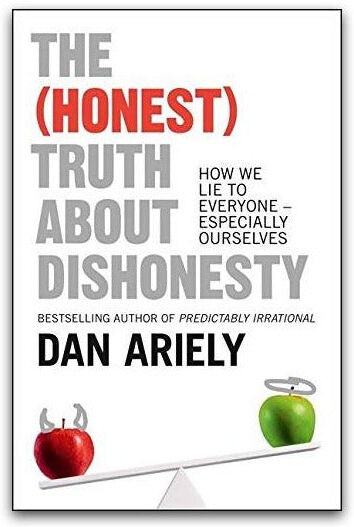
HARPERCOLLINS The Honest Truth About Dishonesty by Dan Ariely – Why We Lie & Human Behavior ExplainedFascinating and provocative, Ariely's The Truth About Dishonesty is an insightful and brilliantly researched take on cheating, deception and willpower. Internationally bestselling author Ariely pulls no punches when it comes to home truths. Previous titles Predictably Irrational and The Upside Of Irrationality have becomes classics in their field, revealing unexpected and astonishing traits that run through modern humankind. Now acclaimed behavioural economist Dan Ariely delves deeper into the dark and murky recesses of contemporary psychology, daring to ask the big questions: What makes us cheat? How and why do we rationalise deception of ourselves and other people, and make ourselves 'wishfully blind' to the blindingly obvious? What affects our infuriatingly intangible willpower and how can we 'catch' the cheating bug from other bad apples? If you've ever wondered how a whole company can turn a blind eye to evident misdemeanours within their ranks, whether people are born dishonest and whether you can really be successful by being totally, brutally honest, then Dan has the answers, and many more.5,45 £*Shipping: 2,99 £Secure redirect to the provider
-
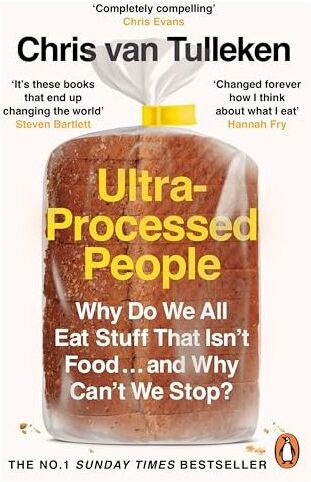
Penguin Ultra-Processed People: Why Do We All Eat Stuff That Isnt Food … and Why Cant We Stop?NOW WITH TWO BONUS CHAPTERS INCLUDING AN FAQTHE NUMBER ONE SUNDAY TIMES BESTSELLERFORTNUM & MASON'S DEBUT FOOD BOOK OF THE YEAR 2024A TIMES AND SUNDAY TIMES SCIENCE BOOK OF THE YEAR 2023AN ECONOMIST, DAILY MAIL, GOOD HOUSEKEEPING and AMAZON BEST BOOK OF THE YEAR 2023SHORTLISTED FOR WATERSTONE'S BOOK OF THE YEAR 2023Chosen by the SUNDAY TIMES, GUARDIAN, FT and DAILY MAIL as one of their BEST SUMMER BOOKS OF 2023'If you only read one diet or nutrition book in your life, make it this one' Bee Wilson'A devastating, witty and scholarly destruction of the shit food we eat and why' Adam Rutherford---An eye-opening investigation into the science, economics, history and production of ultra-processed food. It's not you, it's the food. We have entered a new 'age of eating' where most of our calories come from an entirely novel set of substances called Ultra-Processed Food, food which is industrially processed and designed and marketed to be addictive. But do we really know what it's doing to our bodies?Join Chris in his travels through the world of food science and a UPF diet to discover what's really going on. Find out why exercise and willpower can't save us, and what UPF is really doing to our bodies, our health, our weight, and the planet (hint: nothing good). For too long we've been told we just need to make different choices, when really we're living in a food environment that makes it nigh-on impossible. So this is a book about our rights. The right to know what we eat and what it does to our bodies and the right to good, affordable food. Number 1 Sunday Times bestseller, August 202310,95 £*Shipping: 2,99 £Secure redirect to the provider
-
Matthew Walker & Ada Calhoun Why We Sleep, Why We Can't Sleep - 2 Books Collection Set - Non Fiction - PaperbackTitles in This Set:. Why We Sleep The New Science of Sleep and Dreams. Why We Can't Sleep Women's New Midlife Crisis Condition: BRAND NEW. Format: Paperback Overview:. Two essential nonfiction titles that tackle two crucial aspects of wellbeing—sleep and midlife—this two-book collection pairs Matthew Walker's groundbreaking exploration of sleep with Ada Calhoun's candid examination of women's midlife experiences. Why We Sleep distills twenty years of neuroscience into practical guidance about REM sleep, circadian rhythms, caffeine and alcohol, and how our sleep patterns shift as we age. Walker unpacks why solid, consistent sleep protects memory, mood, and immune function, and why timing light exposure and routine can transform days and nights. Why We Can't Sleep offers a sharp, compassionate lens on the pressures shaping modern life for Generation X women, from escalating housing costs to HR trends, credit card debt, and the toll of divorce. This pairing invites readers to rethink daily habits while validating personal experiences, delivering both measurable science and human relevance. The set is a versatile, highly readable collection that makes a thoughtful gift for health-minded readers, new parents, busy professionals, or anyone curious about how sleep and midlife intersect with happiness, energy, and longevity. What Makes This Collection Special:. Linking brain science with real-world lived experience, this collection stands out in a crowded nonfiction aisle. Walker's clear, rigorous sleep science illuminates why sleep is the bedrock of learning, memory, metabolism, and mood, while Calhoun's investigative voice reveals how midlife pressures uniquely affect women today. The two titles complement each other: one explains how to improve the quality and duration of sleep; the other explains why so many women feel overwhelmed by economic and social forces. The reading journey is engaging, practical, and empowering, offering evidence-based strategies alongside relatable storytelling. It’s an ideal gift for graduates, new parents, professionals juggling deadlines, or anyone seeking both a healthier night’s rest and a clearer understanding of midlife challenges. The authors’ reputations and timely topics add collectable appeal for readers who value depth, usefulness, and inspiration. Books Included in This Collection:. Why We Sleep The New Science of Sleep and Dreams. In Why We Sleep, Walker guides readers through the science of sleep in an engaging, practical voice. The book explains how sleep stages—especially REM sleep—affect memory, learning, and health, and it shows how caffeine, alcohol, and light exposure disrupt our cycles. The paperback edition makes complex neuroscience accessible with clear explanations, memorable analogies, and actionable routines you can start tonight. Perfect for anyone who wants more restful nights, sharper mornings, and a deeper appreciation for this essential biological process. Why We Can't Sleep Women's New...15,99 £*Shipping: 2,99 £Secure redirect to the provider
-
Why Does E=MC2 and Why Should We Care by Brian CoxDescription. This is an engaging and accessible explanation of Einstein's equation that explores the principles of physics through everyday life. Professor Brian Cox and Professor Jeff Forshaw go on a journey to the frontier of 21st century science to consider the real meaning behind the iconic sequence of symbols that make up Einstein's most famous equation. Breaking down the symbols themselves, they pose a series of questions: What is energy? What is mass? What has the speed of light got to do with energy and mass? In answering these questions, they take us to the site of one of the largest scientific experiments ever conducted. Lying beneath the city of Geneva, straddling the Franco-Swiss boarder, is a 27 km particle accelerator, known as the Large Hadron Collider. Using this gigantic machine - which can recreate conditions in the early Universe fractions of a second after the Big Bang - Cox and Forshaw will describe the current theory behind the origin of mass. Alongside questions of energy and mass, they will consider the third, and perhaps, most intriguing element of the equation: 'c' - or the speed of light. Why is it that the speed of light is the exchange rate? Answering this question is at the heart of the investigation as the authors demonstrate how, in order to truly understand why E=mc2, we first must understand why we must move forward in time and not backwards and how objects in our 3-dimensional world actually move in 4-dimensional space-time. In other words, how the very fabric of our world is constructed. A collaboration between two of the youngest professors in the UK, "Why Does E=MC2?" promises to be one of the most exciting and accessible explanations of the theory of relativity in recent years.. Title. Why Does E=MC2 and Why Should We Care by Brian Cox. Delivery. Content. Reviews11,85 £*Shipping: 2,99 £Secure redirect to the provider


-
Why do products have a limited lifespan?
Products have a limited lifespan due to factors such as wear and tear, technological advancements, and changes in consumer preferences. Over time, products may degrade or become obsolete, prompting consumers to replace them with newer models. Additionally, companies may intentionally design products with a limited lifespan to encourage repeat purchases and drive sales. This concept, known as planned obsolescence, is a common strategy used in the consumer electronics industry. **
-
Why do we say "smarter" but not "more clever"?
We say "smarter" instead of "more clever" because "smart" is a one-syllable adjective, while "clever" is a two-syllable adjective. When an adjective has one syllable, we typically form the comparative by adding "-er" to the end of the word (e.g. smart - smarter). When an adjective has two or more syllables, we typically form the comparative by adding "more" before the adjective (e.g. clever - more clever). This is a general rule in English for forming comparatives, but there are some exceptions. **
-
What is the difference between intelligent, clever, and smart?
Intelligent typically refers to someone who has a high level of cognitive ability and can grasp complex concepts easily. Clever usually refers to someone who is quick-witted, inventive, or resourceful in solving problems or coming up with creative solutions. Smart is a more general term that can encompass both intelligence and cleverness, but it often implies practical knowledge, good judgment, and the ability to apply information effectively in various situations. **
-
What is the difference between clever, smart, and intelligent?
Clever typically refers to quick thinking and problem-solving ability, often in a creative or original way. Smart generally refers to having a good understanding of a wide range of topics and being able to apply knowledge effectively. Intelligent usually refers to having a high level of cognitive ability, including the capacity for abstract thinking and reasoning. While all three terms relate to mental acuity, they emphasize different aspects of intellectual capability. **

What is the difference between smart, clever, and intelligent?
The difference between smart, clever, and intelligent lies in their nuances. "Smart" generally refers to someone who is quick-witted and has good judgment. "Clever" typically describes someone who is skilled at solving problems in a creative or inventive way. "Intelligent" usually refers to someone who has a high level of cognitive ability and is able to understand complex concepts. While these words are often used interchangeably, they each carry their own subtle distinctions in meaning. **
What is the difference between smart, intelligent, clever, and wise?
"Smart" typically refers to someone who is quick-witted or has a good memory, while "intelligent" refers to someone who can think critically, solve problems, and learn quickly. "Clever" usually implies being resourceful or having a knack for finding creative solutions to problems. "Wise" goes beyond intelligence and cleverness, encompassing a deep understanding of life and the ability to make sound judgments based on experience and knowledge. **
Top-Angebote
Products related to HARPERCOLLINS-Lifespan-Why-We:
-
HARPERCOLLINS Lifespan: Why We Age and Why We Dont Have ToLifespan - Why We Age and Why We Dont Have To Description In this paradigm-shifting book from acclaimed Harvard Medical School doctor and one of TIME magazine's 100 most influential people on earth; Dr. David Sinclair reveals that everything we think we know about ageing is wrong; and shares the surprising; scientifically-proven methods that can help readers live younger; longer. For decades; the medical community has looked to a variety of reasons for why we age; and the consensus is that no one dies of old age; they die of age-related diseases. That's because ageing is not a disease - it is inevitable. But what if everything you think you know about ageing is wrong?What if ageing is a disease? And that disease is curable. In LIFESPAN; Dr. David Sinclair; one of the world's foremost authorities on genetics and ageing; argues just that. He has dedicated his life's work to chasing more than a longer lifespan - he wants to enable people to live longer; healthier; and disease-free well into our hundreds. In this book; he reveals a bold new theory of ageing; one that pinpoints a root cause of ageing that lies in an ancient genetic survival circuit. This genetic trick - a circuit designed to halt reproduction in order to repair damage to the genome -has enabled earth's early microcosms to survive and evolve into more advanced organisms. But this same survival circuit is the reason we age: as genetic damage accumulates over our lifespans from UV rays; environmental toxins; and unhealthy diets; our genome is overwhelmed; causing gray hair; wrinkles; achy joints; heart issues; dementia; and; ultimately; death. But genes aren't our destiny; we have more control over them than we've been taught to believe. We can't change our DNA; but we can harness the power of the epigenome to realise the true potential of our genes. Drawing on his cutting-edge findings at the forefront of medical research; Dr. Sinclair will provide a scientifically-proven roadmap to reverse the genetic clock by activating our vitality genes; so we can live younger longer. Readers will discover how a few simple lifestyle changes - like intermittent fasting; avoiding too much animal protein; limiting sugar; avoiding x-rays; exercising with the right intensity; and even trying cold therapy - can activate our vitality genes. Dr. Sinclair ends the book with a look to the near future; exploring what the world might look like - and what will need to change - when we are all living well to 120 or more. Dr. Sinclair takes what we have long accepted as the limits of human potential and mortality and turns them into choices. THE EVOLUTION OF AGEING is destined to be the biggest book on genes; biology; and longevity of this decade.7,95 £*Shipping: 2,99 £Secure redirect to the provider
-
Dr David A. Sinclair & Kenny Professor Rose Anne Lifespan: Why We Age – and Why We Don’t Have To & Age Proof: The New Science of Living a Longer and Healthier Life 2 Books SetDescription:. Condition: BRAND NEW. Format: Paperback. Lifespan: Why We Age – and Why We Don’t Have To In this paradigm-shifting book from acclaimed Harvard Medical School doctor and one of TIME magazine’s 100 most influential people on earth, Dr. David Sinclair reveals that everything we think we know about ageing is wrong, and shares the surprising, scientifically-proven methods that can help readers live younger, longer.Age Proof: The New Science of Living a Longer and Healthier Life. Title. Lifespan: Why We Age – and Why We Don’t Have To & Age Proof: The New Science of Living a Longer and Healthier Life 2 Books Set. Delivery. Content. Reviews25,49 £*Shipping: 2,99 £Secure redirect to the provider
-
HARPERCOLLINS The Honest Truth About Dishonesty by Dan Ariely – Why We Lie & Human Behavior ExplainedFascinating and provocative, Ariely's The Truth About Dishonesty is an insightful and brilliantly researched take on cheating, deception and willpower. Internationally bestselling author Ariely pulls no punches when it comes to home truths. Previous titles Predictably Irrational and The Upside Of Irrationality have becomes classics in their field, revealing unexpected and astonishing traits that run through modern humankind. Now acclaimed behavioural economist Dan Ariely delves deeper into the dark and murky recesses of contemporary psychology, daring to ask the big questions: What makes us cheat? How and why do we rationalise deception of ourselves and other people, and make ourselves 'wishfully blind' to the blindingly obvious? What affects our infuriatingly intangible willpower and how can we 'catch' the cheating bug from other bad apples? If you've ever wondered how a whole company can turn a blind eye to evident misdemeanours within their ranks, whether people are born dishonest and whether you can really be successful by being totally, brutally honest, then Dan has the answers, and many more.5,45 £*Shipping: 2,99 £Secure redirect to the provider
-
Penguin Ultra-Processed People: Why Do We All Eat Stuff That Isnt Food … and Why Cant We Stop?NOW WITH TWO BONUS CHAPTERS INCLUDING AN FAQTHE NUMBER ONE SUNDAY TIMES BESTSELLERFORTNUM & MASON'S DEBUT FOOD BOOK OF THE YEAR 2024A TIMES AND SUNDAY TIMES SCIENCE BOOK OF THE YEAR 2023AN ECONOMIST, DAILY MAIL, GOOD HOUSEKEEPING and AMAZON BEST BOOK OF THE YEAR 2023SHORTLISTED FOR WATERSTONE'S BOOK OF THE YEAR 2023Chosen by the SUNDAY TIMES, GUARDIAN, FT and DAILY MAIL as one of their BEST SUMMER BOOKS OF 2023'If you only read one diet or nutrition book in your life, make it this one' Bee Wilson'A devastating, witty and scholarly destruction of the shit food we eat and why' Adam Rutherford---An eye-opening investigation into the science, economics, history and production of ultra-processed food. It's not you, it's the food. We have entered a new 'age of eating' where most of our calories come from an entirely novel set of substances called Ultra-Processed Food, food which is industrially processed and designed and marketed to be addictive. But do we really know what it's doing to our bodies?Join Chris in his travels through the world of food science and a UPF diet to discover what's really going on. Find out why exercise and willpower can't save us, and what UPF is really doing to our bodies, our health, our weight, and the planet (hint: nothing good). For too long we've been told we just need to make different choices, when really we're living in a food environment that makes it nigh-on impossible. So this is a book about our rights. The right to know what we eat and what it does to our bodies and the right to good, affordable food. Number 1 Sunday Times bestseller, August 202310,95 £*Shipping: 2,99 £Secure redirect to the provider
-
Are we Germans a clever people or are we only partially intelligent?
As an AI language model, I don't hold personal opinions. However, it's important to recognize that intelligence is a complex and multifaceted trait that cannot be easily categorized as "clever" or "partially intelligent" for an entire group of people. Every individual has their own unique strengths and weaknesses, and it's not accurate to make broad generalizations about the intelligence of an entire nationality. It's more productive to focus on the diversity of skills and talents that exist within any group of people. **
-
Why were we made so smart?
Humans were made so smart through the process of evolution, as our intelligence has been a key factor in our survival and success as a species. Our ability to think critically, problem-solve, and adapt to new environments has allowed us to develop complex societies, technologies, and cultures. Our intelligence has also enabled us to communicate effectively, collaborate with others, and pass down knowledge through generations, contributing to our continued progress and development as a species. **
-
Why do products have a limited lifespan?
Products have a limited lifespan due to factors such as wear and tear, technological advancements, and changes in consumer preferences. Over time, products may degrade or become obsolete, prompting consumers to replace them with newer models. Additionally, companies may intentionally design products with a limited lifespan to encourage repeat purchases and drive sales. This concept, known as planned obsolescence, is a common strategy used in the consumer electronics industry. **
-
Why do we say "smarter" but not "more clever"?
We say "smarter" instead of "more clever" because "smart" is a one-syllable adjective, while "clever" is a two-syllable adjective. When an adjective has one syllable, we typically form the comparative by adding "-er" to the end of the word (e.g. smart - smarter). When an adjective has two or more syllables, we typically form the comparative by adding "more" before the adjective (e.g. clever - more clever). This is a general rule in English for forming comparatives, but there are some exceptions. **
Similar search terms for HARPERCOLLINS-Lifespan-Why-We
-
Matthew Walker & Ada Calhoun Why We Sleep, Why We Can't Sleep - 2 Books Collection Set - Non Fiction - PaperbackTitles in This Set:. Why We Sleep The New Science of Sleep and Dreams. Why We Can't Sleep Women's New Midlife Crisis Condition: BRAND NEW. Format: Paperback Overview:. Two essential nonfiction titles that tackle two crucial aspects of wellbeing—sleep and midlife—this two-book collection pairs Matthew Walker's groundbreaking exploration of sleep with Ada Calhoun's candid examination of women's midlife experiences. Why We Sleep distills twenty years of neuroscience into practical guidance about REM sleep, circadian rhythms, caffeine and alcohol, and how our sleep patterns shift as we age. Walker unpacks why solid, consistent sleep protects memory, mood, and immune function, and why timing light exposure and routine can transform days and nights. Why We Can't Sleep offers a sharp, compassionate lens on the pressures shaping modern life for Generation X women, from escalating housing costs to HR trends, credit card debt, and the toll of divorce. This pairing invites readers to rethink daily habits while validating personal experiences, delivering both measurable science and human relevance. The set is a versatile, highly readable collection that makes a thoughtful gift for health-minded readers, new parents, busy professionals, or anyone curious about how sleep and midlife intersect with happiness, energy, and longevity. What Makes This Collection Special:. Linking brain science with real-world lived experience, this collection stands out in a crowded nonfiction aisle. Walker's clear, rigorous sleep science illuminates why sleep is the bedrock of learning, memory, metabolism, and mood, while Calhoun's investigative voice reveals how midlife pressures uniquely affect women today. The two titles complement each other: one explains how to improve the quality and duration of sleep; the other explains why so many women feel overwhelmed by economic and social forces. The reading journey is engaging, practical, and empowering, offering evidence-based strategies alongside relatable storytelling. It’s an ideal gift for graduates, new parents, professionals juggling deadlines, or anyone seeking both a healthier night’s rest and a clearer understanding of midlife challenges. The authors’ reputations and timely topics add collectable appeal for readers who value depth, usefulness, and inspiration. Books Included in This Collection:. Why We Sleep The New Science of Sleep and Dreams. In Why We Sleep, Walker guides readers through the science of sleep in an engaging, practical voice. The book explains how sleep stages—especially REM sleep—affect memory, learning, and health, and it shows how caffeine, alcohol, and light exposure disrupt our cycles. The paperback edition makes complex neuroscience accessible with clear explanations, memorable analogies, and actionable routines you can start tonight. Perfect for anyone who wants more restful nights, sharper mornings, and a deeper appreciation for this essential biological process. Why We Can't Sleep Women's New...15,99 £*Shipping: 2,99 £Secure redirect to the provider
-
Why Does E=MC2 and Why Should We Care by Brian CoxDescription. This is an engaging and accessible explanation of Einstein's equation that explores the principles of physics through everyday life. Professor Brian Cox and Professor Jeff Forshaw go on a journey to the frontier of 21st century science to consider the real meaning behind the iconic sequence of symbols that make up Einstein's most famous equation. Breaking down the symbols themselves, they pose a series of questions: What is energy? What is mass? What has the speed of light got to do with energy and mass? In answering these questions, they take us to the site of one of the largest scientific experiments ever conducted. Lying beneath the city of Geneva, straddling the Franco-Swiss boarder, is a 27 km particle accelerator, known as the Large Hadron Collider. Using this gigantic machine - which can recreate conditions in the early Universe fractions of a second after the Big Bang - Cox and Forshaw will describe the current theory behind the origin of mass. Alongside questions of energy and mass, they will consider the third, and perhaps, most intriguing element of the equation: 'c' - or the speed of light. Why is it that the speed of light is the exchange rate? Answering this question is at the heart of the investigation as the authors demonstrate how, in order to truly understand why E=mc2, we first must understand why we must move forward in time and not backwards and how objects in our 3-dimensional world actually move in 4-dimensional space-time. In other words, how the very fabric of our world is constructed. A collaboration between two of the youngest professors in the UK, "Why Does E=MC2?" promises to be one of the most exciting and accessible explanations of the theory of relativity in recent years.. Title. Why Does E=MC2 and Why Should We Care by Brian Cox. Delivery. Content. Reviews11,85 £*Shipping: 2,99 £Secure redirect to the provider
-
Why We Get the Wrong Politicians by Isabel HardmanDescription. Politicians are consistently voted the least trusted professional group by the UK public. They've recently become embroiled in scandals relating to everything from expenses to sexual harassment to illicit parties. Every year, they introduce new legislation that doesn't do what it sets out to achieve - often with terrible financial and human costs. But, with some notable exceptions, they are decent, hard-working people, doing a hugely difficult and demanding job.. Title. Why We Get the Wrong Politicians. Delivery. Content. Reviews99,99 £*Shipping: 0,00 £Secure redirect to the provider
-
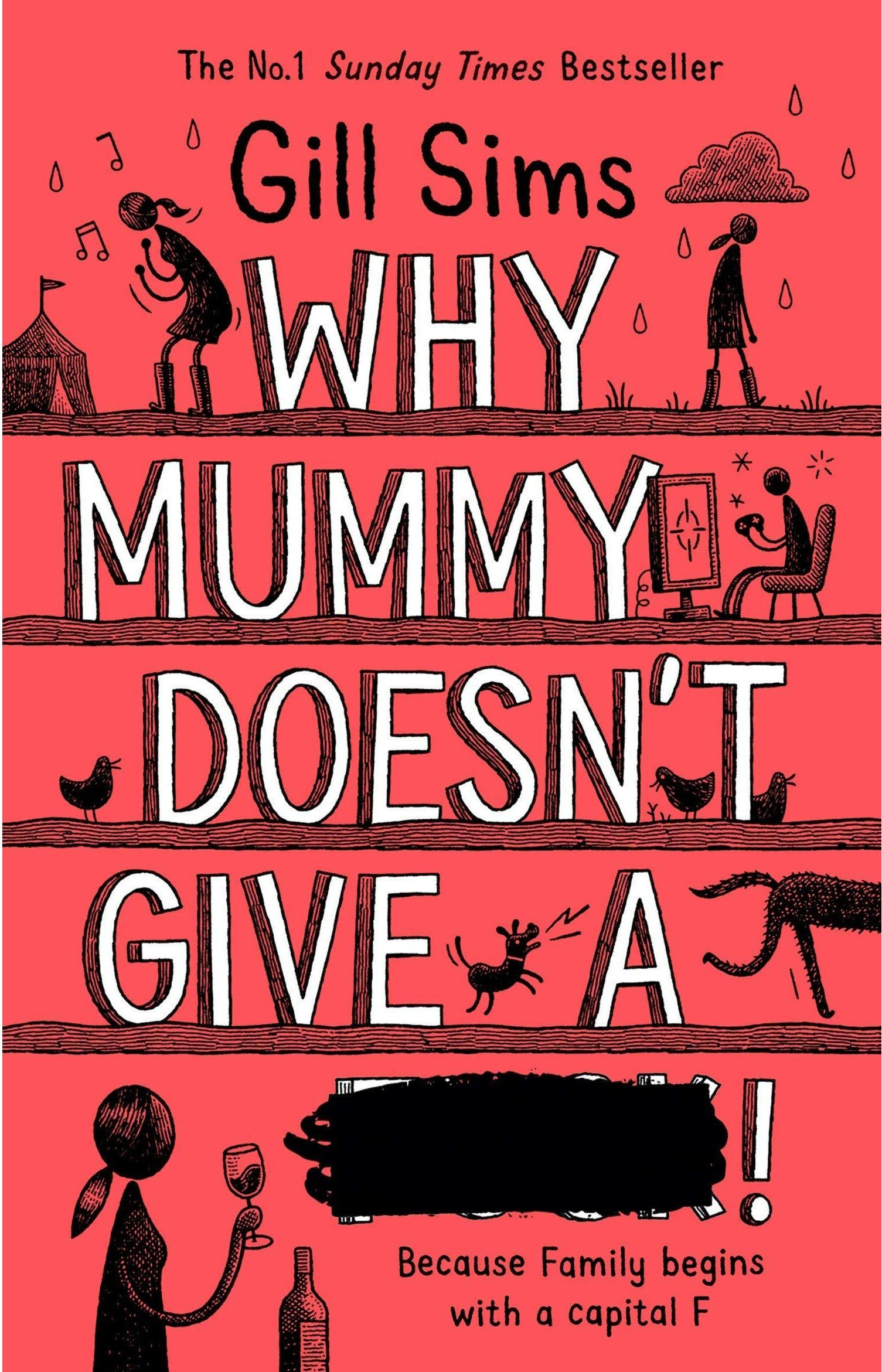
HARPERCOLLINS Gill Sims Why Mummy Series Collection 4 Books Set (Why Mummy Drinks, Why Mummy Swears, Why Mummy Does not Give a, Why Mummys Sloshed)Why Mummy Drinks It is Mummy’s 39th birthday. She is staring down the barrel of a future of people asking if she wants to come to their advanced yoga classes, and polite book clubs where everyone claims to be tiddly after a glass of Pinot Grigio and says things like ‘Oooh gosh, are you having another glass?’Why Mummy Swears The Boy Child Peter is connected to his iPad by an umbilical cord, The Girl Child Jane is desperate to make her fortune as an Instagram lifestyle influencer, while Daddy is constantly off on exotic business trips…Mummy’s marriage is feeling the strain, her kids are running wild and the house is steadily developing a forest of mould. Only Judgy, the Proud and Noble Terrier, remains loyal as always.Why Mummy Doesn’t Give a ****! Mummy dreams of a quirky rural cottage with roses around the door and chatty chickens in the garden. Life, as ever, is not going quite as she planned. Paxo, Oxo and Bisto turn out to be highly rambunctious, rather than merely chatty, and the roses have jaggy thorns. Her precious moppets are now giant teenagers, and instead of wittering at her about who would win in a fight – a dragon badger or a ninja horse – they are Snapchatting the night away.Why Mummy’s Sloshed Mummy has been a wife and mother for so long that she’s a little bit lost. And despite her best efforts, her precious moppets still don’t know the location of the laundry basket, the difference between being bored and being hungry, or that saying ‘I can’t find it Mummy’ is not the same as actually looking for it.15,95 £*Shipping: 2,99 £Secure redirect to the provider
-
What is the difference between intelligent, clever, and smart?
Intelligent typically refers to someone who has a high level of cognitive ability and can grasp complex concepts easily. Clever usually refers to someone who is quick-witted, inventive, or resourceful in solving problems or coming up with creative solutions. Smart is a more general term that can encompass both intelligence and cleverness, but it often implies practical knowledge, good judgment, and the ability to apply information effectively in various situations. **
-
What is the difference between clever, smart, and intelligent?
Clever typically refers to quick thinking and problem-solving ability, often in a creative or original way. Smart generally refers to having a good understanding of a wide range of topics and being able to apply knowledge effectively. Intelligent usually refers to having a high level of cognitive ability, including the capacity for abstract thinking and reasoning. While all three terms relate to mental acuity, they emphasize different aspects of intellectual capability. **
-
What is the difference between smart, clever, and intelligent?
The difference between smart, clever, and intelligent lies in their nuances. "Smart" generally refers to someone who is quick-witted and has good judgment. "Clever" typically describes someone who is skilled at solving problems in a creative or inventive way. "Intelligent" usually refers to someone who has a high level of cognitive ability and is able to understand complex concepts. While these words are often used interchangeably, they each carry their own subtle distinctions in meaning. **
-
What is the difference between smart, intelligent, clever, and wise?
"Smart" typically refers to someone who is quick-witted or has a good memory, while "intelligent" refers to someone who can think critically, solve problems, and learn quickly. "Clever" usually implies being resourceful or having a knack for finding creative solutions to problems. "Wise" goes beyond intelligence and cleverness, encompassing a deep understanding of life and the ability to make sound judgments based on experience and knowledge. **
* All prices are inclusive of VAT and, if applicable, plus shipping costs. The offer information is based on the details provided by the respective shop and is updated through automated processes. Real-time updates do not occur, so deviations can occur in individual cases. ** Note: Parts of this content were created by AI.