Buy schlau.eu ?
We are moving the project
schlau.eu .
Are you interested in purchasing the domain
schlau.eu ?
domain@kv-gmbh.de · 0541-91531010
Buy schlau.eu ?
What is the difference between intelligent, clever, and smart?
Intelligent typically refers to someone who has a high level of cognitive ability and can grasp complex concepts easily. Clever usually refers to someone who is quick-witted, inventive, or resourceful in solving problems or coming up with creative solutions. Smart is a more general term that can encompass both intelligence and cleverness, but it often implies practical knowledge, good judgment, and the ability to apply information effectively in various situations. **
What is the difference between clever, smart, and intelligent?
Clever typically refers to quick thinking and problem-solving ability, often in a creative or original way. Smart generally refers to having a good understanding of a wide range of topics and being able to apply knowledge effectively. Intelligent usually refers to having a high level of cognitive ability, including the capacity for abstract thinking and reasoning. While all three terms relate to mental acuity, they emphasize different aspects of intellectual capability. **


Similar search terms for The-Readers-Paradise-The
Top-Angebote
Products related to The-Readers-Paradise-The:
-
The Readers Paradise The Psychology of Money Mindset: Decoding Financial Behaviour by Dr. N. Gosain - Paperback - Personal Finance & Money Psychology GuideDiscover the psychology behind your financial decisions with this practical guide by Dr. N. Gosain. The Psychology of Money Mindset: Decoding Financial Behaviour is a thought-provoking read that explores the psychological roots of our financial behaviour and shows how mindset, not just income, determines long-term financial success. This accessible paperback helps readers uncover unconscious habits, biases, and emotional triggers that shape spending, saving, and investing, and provides real-world money management advice to build a healthier, more confident relationship with money and take control of their financial future.2,99 £*Shipping: 2,99 £Secure redirect to the provider
-
The Readers Paradise The Psychology of Management: Building and Sustaining a Strong Organizational Structure and Culture by Sanchit Khullar - Paperback - BusinessDiscover the practical guide to effective management with The Psychology of Management: Building and Sustaining a Strong Organizational Structure and Culture by Sanchit Khullar. This book offers a research-informed approach to leadership, blending psychological theory with real-world management practice. It explores how human behavior, motivation, and culture shape organizational performance, providing a deeper understanding of what makes workplaces thrive. Written for managers, HR professionals, executives, and business students, this book breaks down the complexities of leadership, making it an essential resource for anyone looking to improve their management skills.2,99 £*Shipping: 2,99 £Secure redirect to the provider
-
The Readers Paradise The 1% Within by Siddharth Salaria - Self-Help Personal Development Paperback - Unlock Your Potential with Small Daily Mindset ShiftsWe all sense untapped potential inside us, yet most people never close the gap between who they are and who they could become. The 1% Within explores why ordinary effort so rarely produces extraordinary results, and argues that the real obstacles are small, invisible habits of mind rather than a lack of talent. Siddharth Salaria offers a grounded, practical framework for identifying these quiet blockers and replacing them with daily actions that compound into lasting personal growth. The 1% Within is a personal development guide built around a simple but powerful idea: transformation rarely comes from one dramatic overhaul. It comes from a series of small, consistent internal adjustments that most people overlook entirely. Siddharth Salaria writes directly to readers who feel capable of more but find themselves stuck in familiar patterns of procrastination and self-doubt.2,99 £*Shipping: 2,99 £Secure redirect to the provider
-
The Readers Paradise The Lean Startup, Managing Business Start-Ups & The Master Mind - 3 Books Collection Set by Eric Ries, V.K.Stevin & Napoleon Hill - New PaperbackThis 3-book collection set brings together The Lean Startup by Eric Ries, Managing Business Start-Ups by V.K.Stevin, and The Master Mind by Napoleon Hill. The books cover startup methodology, practical business management, and the mindset habits behind lasting success. They provide a rounded toolkit for anyone building or growing a venture, from first-time founders to seasoned managers looking to sharpen their thinking. The Lean Startup is a guide to building companies that work, showing entrepreneurs how to test ideas quickly, learn from real customer feedback, and avoid wasting time and money on products nobody wants.22,99 £*Shipping: 2,99 £Secure redirect to the provider


-
What is the difference between smart, clever, and intelligent?
The difference between smart, clever, and intelligent lies in their nuances. "Smart" generally refers to someone who is quick-witted and has good judgment. "Clever" typically describes someone who is skilled at solving problems in a creative or inventive way. "Intelligent" usually refers to someone who has a high level of cognitive ability and is able to understand complex concepts. While these words are often used interchangeably, they each carry their own subtle distinctions in meaning. **
-
What is the difference between smart, intelligent, clever, and wise?
"Smart" typically refers to someone who is quick-witted or has a good memory, while "intelligent" refers to someone who can think critically, solve problems, and learn quickly. "Clever" usually implies being resourceful or having a knack for finding creative solutions to problems. "Wise" goes beyond intelligence and cleverness, encompassing a deep understanding of life and the ability to make sound judgments based on experience and knowledge. **
-
Do Ebook Readers harm the eyes?
Ebook readers, like traditional books, do not inherently harm the eyes. However, reading for extended periods of time on any device can cause eye strain and discomfort. To reduce the risk of eye strain while using an ebook reader, it is recommended to take breaks, adjust the brightness and font size, and ensure proper lighting in the reading environment. Overall, ebook readers are a convenient and portable way to enjoy books without causing harm to the eyes when used responsibly. **
-
What are the exact differences between intelligent, clever, smart, wise, etc.?
Intelligent typically refers to someone's ability to learn, understand, and apply knowledge effectively. Clever often implies quick thinking or being resourceful in a creative way. Smart generally refers to having good judgment or being able to make good decisions. Wise usually suggests having a deep understanding of people and situations, often gained through experience. Each term carries slightly different connotations, but they all generally refer to mental acuity or sharpness in different ways. **


How does the Islamic paradise differ from Christian concepts of paradise?
The Islamic paradise, known as Jannah, is described as a lush garden with flowing rivers and abundant fruits, where believers will be rewarded with eternal bliss and pleasure. In contrast, Christian concepts of paradise, often referred to as heaven, focus more on the presence of God and eternal communion with Him. Additionally, Christianity emphasizes the importance of salvation through faith in Jesus Christ for entry into paradise, while Islam emphasizes the importance of good deeds and submission to Allah. Overall, while both religions share the idea of a paradise as a place of eternal happiness, the specific details and requirements for entry differ between Islamic and Christian beliefs. **
How does the Islamic paradise differ from Christian ideas of paradise?
The Islamic paradise, known as Jannah, is described as a lush garden with flowing rivers and abundant fruits, where believers are rewarded with eternal bliss for their faith and good deeds. In contrast, Christian ideas of paradise, often referred to as heaven, focus more on the presence of God and the promise of eternal life in His presence. While both concepts emphasize reward and eternal happiness, the Islamic paradise places a strong emphasis on physical pleasures and rewards, whereas Christian ideas of paradise focus more on spiritual fulfillment and communion with God. **
Top-Angebote
Products related to The-Readers-Paradise-The:
-
The Readers Paradise Metathinking: Understanding The Intelligence Behind Thinking by Nupur Gosain - Paperback Non Fiction Self-Help Book - NewMetathinking: Understanding The Intelligence Behind Thinking invites readers to step back and observe their own mental processes in real time. Author Nupur Gosain explores the gap between simply having intelligence and knowing how to direct it effectively. Rather than offering vague encouragement, the book breaks down practical frameworks for recognizing mental shortcuts, interrupting unhelpful thought loops, and making calmer, more deliberate decisions. It is a grounded, accessible read for anyone who wants sharper self-awareness without wading through dense academic theory. Metathinking is built around a simple but powerful idea: the way you think about your thinking matters more than raw intellect alone. Nupur Gosain guides readers through the everyday mental habits that quietly shape decisions, from snap judgments to repeated patterns of self-doubt.2,99 £*Shipping: 2,99 £Secure redirect to the provider
-
The Readers Paradise Your Life, Your Rules by Sumit Vig - Boundaries, Self-Trust & The Courage to Choose Yourself - Self-Help PaperbackYour Life, Your Rules is a straight-talking self-help paperback for anyone who feels pulled in every direction except their own. Author Sumit Vig strips away vague motivational language and focuses instead on practical boundary-setting, rebuilding self-trust, and learning to choose yourself without guilt. Rather than offering abstract theory, the book walks readers through real situations at work, at home, and in friendships, giving concrete tools to recognise draining patterns and respond with calm, confident decisions that protect long-term wellbeing and energy. Many self-help titles tell readers what is wrong with their habits; this book focuses on what to build instead. Sumit Vig organises the material into short, action-oriented chapters, each ending with a clear takeaway rather than a wall of theory. Early chapters tackle the roots of people-pleasing and the importance of establishing personal boundaries.2,99 £*Shipping: 2,99 £Secure redirect to the provider
-
The Readers Paradise The Psychology of Money Mindset: Decoding Financial Behaviour by Dr. N. Gosain - Paperback - Personal Finance & Money Psychology GuideDiscover the psychology behind your financial decisions with this practical guide by Dr. N. Gosain. The Psychology of Money Mindset: Decoding Financial Behaviour is a thought-provoking read that explores the psychological roots of our financial behaviour and shows how mindset, not just income, determines long-term financial success. This accessible paperback helps readers uncover unconscious habits, biases, and emotional triggers that shape spending, saving, and investing, and provides real-world money management advice to build a healthier, more confident relationship with money and take control of their financial future.2,99 £*Shipping: 2,99 £Secure redirect to the provider
-
The Readers Paradise The Psychology of Management: Building and Sustaining a Strong Organizational Structure and Culture by Sanchit Khullar - Paperback - BusinessDiscover the practical guide to effective management with The Psychology of Management: Building and Sustaining a Strong Organizational Structure and Culture by Sanchit Khullar. This book offers a research-informed approach to leadership, blending psychological theory with real-world management practice. It explores how human behavior, motivation, and culture shape organizational performance, providing a deeper understanding of what makes workplaces thrive. Written for managers, HR professionals, executives, and business students, this book breaks down the complexities of leadership, making it an essential resource for anyone looking to improve their management skills.2,99 £*Shipping: 2,99 £Secure redirect to the provider
-
What is the difference between intelligent, clever, and smart?
Intelligent typically refers to someone who has a high level of cognitive ability and can grasp complex concepts easily. Clever usually refers to someone who is quick-witted, inventive, or resourceful in solving problems or coming up with creative solutions. Smart is a more general term that can encompass both intelligence and cleverness, but it often implies practical knowledge, good judgment, and the ability to apply information effectively in various situations. **
-
What is the difference between clever, smart, and intelligent?
Clever typically refers to quick thinking and problem-solving ability, often in a creative or original way. Smart generally refers to having a good understanding of a wide range of topics and being able to apply knowledge effectively. Intelligent usually refers to having a high level of cognitive ability, including the capacity for abstract thinking and reasoning. While all three terms relate to mental acuity, they emphasize different aspects of intellectual capability. **
-
What is the difference between smart, clever, and intelligent?
The difference between smart, clever, and intelligent lies in their nuances. "Smart" generally refers to someone who is quick-witted and has good judgment. "Clever" typically describes someone who is skilled at solving problems in a creative or inventive way. "Intelligent" usually refers to someone who has a high level of cognitive ability and is able to understand complex concepts. While these words are often used interchangeably, they each carry their own subtle distinctions in meaning. **
-
What is the difference between smart, intelligent, clever, and wise?
"Smart" typically refers to someone who is quick-witted or has a good memory, while "intelligent" refers to someone who can think critically, solve problems, and learn quickly. "Clever" usually implies being resourceful or having a knack for finding creative solutions to problems. "Wise" goes beyond intelligence and cleverness, encompassing a deep understanding of life and the ability to make sound judgments based on experience and knowledge. **
Similar search terms for The-Readers-Paradise-The
-
The Readers Paradise The 1% Within by Siddharth Salaria - Self-Help Personal Development Paperback - Unlock Your Potential with Small Daily Mindset ShiftsWe all sense untapped potential inside us, yet most people never close the gap between who they are and who they could become. The 1% Within explores why ordinary effort so rarely produces extraordinary results, and argues that the real obstacles are small, invisible habits of mind rather than a lack of talent. Siddharth Salaria offers a grounded, practical framework for identifying these quiet blockers and replacing them with daily actions that compound into lasting personal growth. The 1% Within is a personal development guide built around a simple but powerful idea: transformation rarely comes from one dramatic overhaul. It comes from a series of small, consistent internal adjustments that most people overlook entirely. Siddharth Salaria writes directly to readers who feel capable of more but find themselves stuck in familiar patterns of procrastination and self-doubt.2,99 £*Shipping: 2,99 £Secure redirect to the provider
-
The Readers Paradise The Lean Startup, Managing Business Start-Ups & The Master Mind - 3 Books Collection Set by Eric Ries, V.K.Stevin & Napoleon Hill - New PaperbackThis 3-book collection set brings together The Lean Startup by Eric Ries, Managing Business Start-Ups by V.K.Stevin, and The Master Mind by Napoleon Hill. The books cover startup methodology, practical business management, and the mindset habits behind lasting success. They provide a rounded toolkit for anyone building or growing a venture, from first-time founders to seasoned managers looking to sharpen their thinking. The Lean Startup is a guide to building companies that work, showing entrepreneurs how to test ideas quickly, learn from real customer feedback, and avoid wasting time and money on products nobody wants.22,99 £*Shipping: 2,99 £Secure redirect to the provider
-
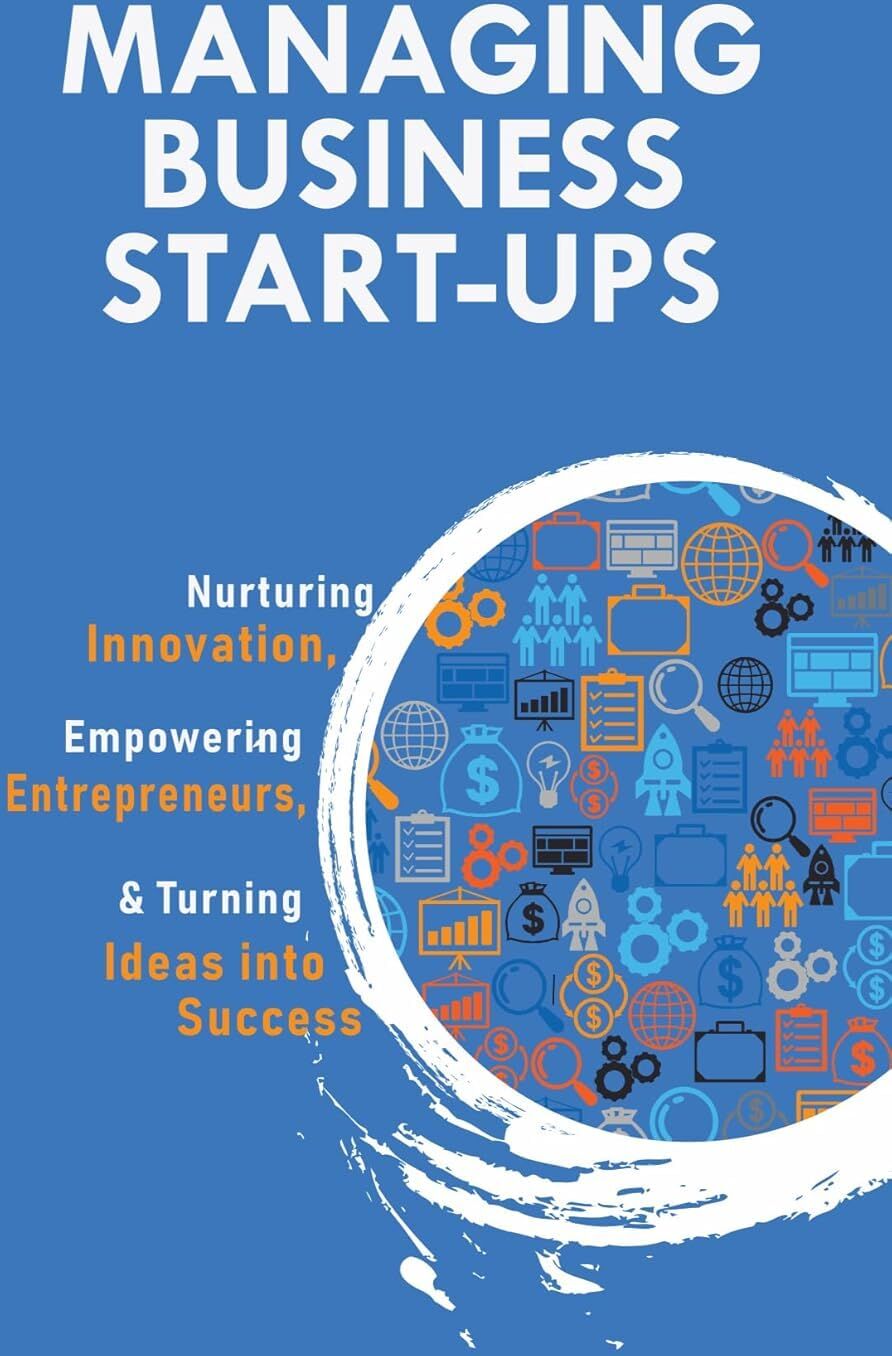
The Readers Paradise Managing Business Start-Ups by V.K.Stevin - Paperback - Non Fiction Entrepreneurship Guide for Aspiring Business FoundersManaging Business Start-Ups by V.K.Stevin is a practical guide for anyone building a business from scratch. This paperback book covers everything from validating an idea to scaling a growing team, distilling the entrepreneurial journey into clear, actionable steps. Written for founders, students, and side-hustlers alike, it combines real-world strategy with easy-to-follow frameworks, helping readers move confidently from concept to launch and beyond. The book walks readers through the full arc of building a company, starting with turning raw ideas into validated concepts through thorough market research, customer discovery, and lean experimentation. From there, it lays out solid foundations: assembling a complementary founding team, putting the right legal structures in place, and more. This brand-new paperback is published by The Readers Paradise and has the ISBN 9789359772318.2,49 £*Shipping: 2,99 £Secure redirect to the provider
-
The Readers Paradise What Happy People Know: The Mindset, Habits & Heart of Fulfilling Life by Ishi Macay - Paperback Self-Help Guide for AdultsWhat Happy People Know: The Mindset, Habits And Heart Of Fulfilling Life by Ishi Macay is a practical self-help paperback that focuses on the everyday actions and mental patterns behind lasting contentment. Rather than offering abstract theory, the book breaks happiness down into accessible habits you can start using immediately. It explores mindset, resilience, gratitude and authentic connection, giving readers a realistic, workable toolkit for building a more meaningful daily life, whatever their starting point or circumstances currently look like. This grounded, three-part approach to happiness covers mindset, habits, and heart. The mindset strand encourages readers to notice the internal dialogue and limiting beliefs that quietly shape daily experience, reframing setbacks as a normal part of growth rather than evidence of failure. The habits strand focuses on practical actions to build a more fulfilling life.2,99 £*Shipping: 2,99 £Secure redirect to the provider
-
Do Ebook Readers harm the eyes?
Ebook readers, like traditional books, do not inherently harm the eyes. However, reading for extended periods of time on any device can cause eye strain and discomfort. To reduce the risk of eye strain while using an ebook reader, it is recommended to take breaks, adjust the brightness and font size, and ensure proper lighting in the reading environment. Overall, ebook readers are a convenient and portable way to enjoy books without causing harm to the eyes when used responsibly. **
-
What are the exact differences between intelligent, clever, smart, wise, etc.?
Intelligent typically refers to someone's ability to learn, understand, and apply knowledge effectively. Clever often implies quick thinking or being resourceful in a creative way. Smart generally refers to having good judgment or being able to make good decisions. Wise usually suggests having a deep understanding of people and situations, often gained through experience. Each term carries slightly different connotations, but they all generally refer to mental acuity or sharpness in different ways. **
-
How does the Islamic paradise differ from Christian concepts of paradise?
The Islamic paradise, known as Jannah, is described as a lush garden with flowing rivers and abundant fruits, where believers will be rewarded with eternal bliss and pleasure. In contrast, Christian concepts of paradise, often referred to as heaven, focus more on the presence of God and eternal communion with Him. Additionally, Christianity emphasizes the importance of salvation through faith in Jesus Christ for entry into paradise, while Islam emphasizes the importance of good deeds and submission to Allah. Overall, while both religions share the idea of a paradise as a place of eternal happiness, the specific details and requirements for entry differ between Islamic and Christian beliefs. **
-
How does the Islamic paradise differ from Christian ideas of paradise?
The Islamic paradise, known as Jannah, is described as a lush garden with flowing rivers and abundant fruits, where believers are rewarded with eternal bliss for their faith and good deeds. In contrast, Christian ideas of paradise, often referred to as heaven, focus more on the presence of God and the promise of eternal life in His presence. While both concepts emphasize reward and eternal happiness, the Islamic paradise places a strong emphasis on physical pleasures and rewards, whereas Christian ideas of paradise focus more on spiritual fulfillment and communion with God. **
* All prices are inclusive of VAT and, if applicable, plus shipping costs. The offer information is based on the details provided by the respective shop and is updated through automated processes. Real-time updates do not occur, so deviations can occur in individual cases. ** Note: Parts of this content were created by AI.